Preamble
A New US Constitution: Part I

Masked men are arresting people without warrants and shipping them off to foreign prisons where they’re being used as propaganda. Cuts to USAID are projected to kill 3 million people by 2030 due to HIV alone. Every day there’s a some new policy aimed at reestablishing racial segregation. Trans rights are being eviscerated.
Fascism in America isn’t just on the rise, it’s fully here.
Shit is bleak.
I’m not a fatalist though. Even though Hakeem and Chuck have led the most pitiful opposition I’ve ever seen, some people are, in fact, doing shit. The Tesla Takedowns are affecting Elon’s bottom line. AOC and Bernie are barnstorming the country. Walz is doing similar work in battleground districts. A sort of leftist “Tea party” seems to be developing with candidates like Kat Abughazaleh already emerging. Booker’s speech seems to have broken through the media noise. There were over 1,200 demonstrations yesterday alone. People are clearly pissed and looking for a way to push back. Though it will be painful, I do think we will eventually claw our way out of this quagmire.

What do we do if we win though? It’s not enough to say things will go back to normal. ‘Normal’ is what got us in this mess in the first place. We need to start thinking now about what we want our country to look like. That’s what this series of essays is going to be. I wanted to look at the foundation of America, the Constitution, and see if we could make it serve us better.
I’m aware that a large problem with our system is that our constitution is not easily changed. In our current political system many (almost all) the things I’m proposing are functionally impossible. Still, I have to think there is value in the exercise. To dream big and think of a fairer and freer system.
Is there perhaps a touch of hubris in some twenty-something fuckhead thinking he knows better than our founding fathers? Yeah, duh. Call me Icarus cause the sun looks nice. But you know what I have that those old foagies didn’t? Two hundred and fifty-ish years of history, the internet, and the moral superiority of knowing that slavery is wrong. Fuck you, Thomas Jefferson.
So with that being established, let’s start where all great things do, the beginning.
The Preamble
We the People of the United States, in Order to form a more perfect Union, establish Justice, insure domestic Tranquility, provide for the common defence, promote the general Welfare, and secure the Blessings of Liberty to ourselves and our Posterity, do ordain and establish this Constitution for the United States of America.
Okay. This is like so embarrassing after I came in all hot back there, but they kind of popped off with this one. Obviously the devil is in the details, but I broadly agree in principle that this is what the government should do:
We should establish a system of justice
We should create a stable society
We should stop invading foreign powers
We should try to make things better for the people
We should protect our freedom from oppression
Fucking based of you Gouverneur Morris. I could do without the religious language surrounding liberty, but we have much bigger fish to fry.
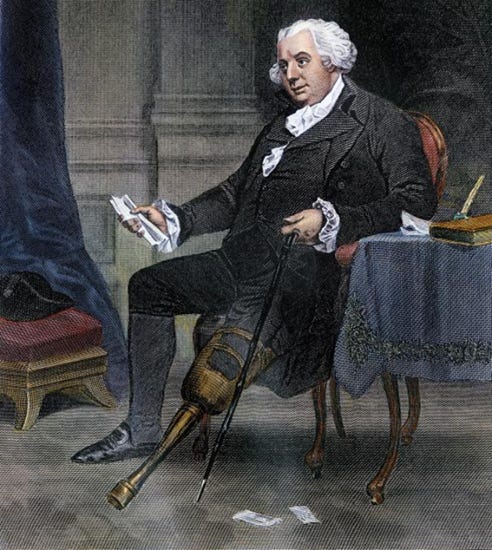
The only substantive change I’d make is three words: more perfect Union.
This is the first reference to federalism; the states coming together to form the union that is the federal government. By design - though less so in practice these days - the states hold most express governmental authority except that which is granted to the federal government in the constitution.
To any pedantic haters: I know this structure is most explicitly established in the 10th Amendment, but deciding your form of government is pretty central so I decided to head that off at the first reference.
I think this system made enough sense in 1776. At that time, there was no established American identity. Instead, people were Virginians, New Yorkers, and Pennsylvanianese or whatever. They were all quite culturally distinct and didn’t have much in common except a disdain for the British government. Subjecting them all to the same rules from a central government filled with people who were basically foreigners to them could have very easily felt like the exact tyranny they had just declared independence from.
That’s not true anymore. There is a robust American identity. We still have regional differences and those are great, but I don’t think having a Buc-ees instead of a Wawa is quite the same thing as what they were dealing with back then. More importantly, federalism causes bad shit to happen.
The Bad Shit
1. A Patchwork of Laws
In a federalist society the individual states get to make their own laws. It’s why we can enjoy the devil’s lettuce in our liberal post-modern Marxist dens of sin but you get sent to labor camp for doing the same in Real America.
This patchwork of laws is the main way they’ve been stripping away trans rights and women’s rights for years. They’ve made it illegal in many states to give puberty blockers to trans teens. They’ve restricted the conditions of abortion access to the point of an outright ban. Hell, the patchwork of laws is why in four states you can fully just marry your child to a grown adult.
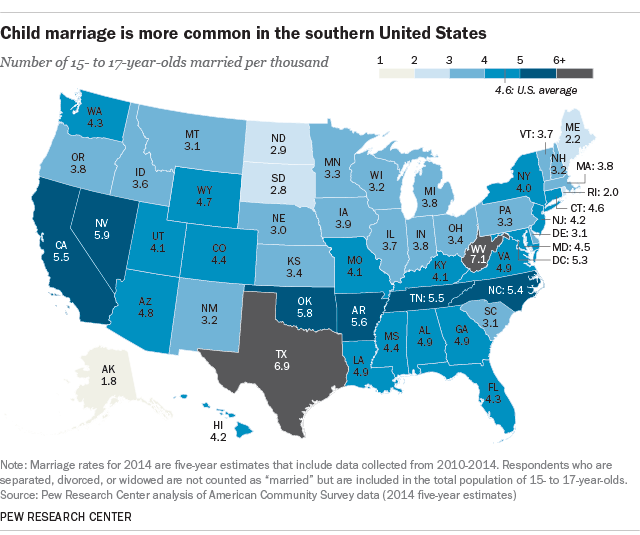
I’m not a fan.
I understand that some laws should be different depending on where you live. Taxes make sense because the government will cost more or less to run in certain places. Things like abortion, gun laws, and voting laws don’t. These aren’t just local concerns. These are discussions of our fundamental rights as people. Something is wrong with your government if your civil liberties depend on where in the country you happen to be standing.
Also, we should be honest about how this system has been most notably deployed: the Civil War. The insufferable racist is not wholly wrong when he claims the war was about states’ rights. It was about the states’ right to create a system of law where whites could enslave Black people.
When your most popular work is defending slavery, I think that’s a hard thing to come back from.
Now, to quickly address a relevant counter-argument.
“It’s not a patchwork of laws, they’re ‘laboratories of democracy.’ “
This idea of states as ‘laboratories of democracy’ was first articulated by Supreme Court justice Louis Brandeis in his dissent for the case New State Ice Co. v. Liebmann. I get the appeal of this argument. The scientific method, while not terribly exciting, is a good way to go about doing things. A state tries something, other states see how it goes. If it goes well, then they implement it. If it goes poorly, they don’t.
It’s a nice theory and there are times when this does happen. However, it’s naïve to think that this is how our political system broadly works in today’s America. A legislature in Texas isn’t going to pass a law that went well in California because that would be an admission that the opposite party did something right. The rise of negative partisanship has made this approach nonviable.
Also, in a more centralized system you can still have experiments in democracy. Pilot programs exist. We can just do those.
“Social causes can be advanced state-by-state instead of only nationally.”
I am on the whole more sympathetic to this argument. There is an advantage for advancing causes in smaller areas. It costs less and you get results faster because you’re dealing with fewer people. It was good that same-sex couples could be married in certain states sooner. It was good that women had suffrage in some states earlier. It’s also likely that these gains help galvanize these movements.
I don’t mean to diminish the importance of these efforts and other causes like them. They are important and I am grateful for those advances. However, while there is the opportunity to advance rights state-by-state, rights can also be stripped away state-by-state. I couldn’t find firm data on this, but from a personal perspective the way this works now feels like for every one step forward there are two steps back. Strongholds for the left can protect rights, but strongholds for the right can strip them away. On the horizon we can see the goals of our democracy that Gouverneur Morris lays out - justice, liberty, welfare - but we’re not getting closer to them. We are clear-eyed as we walk backwards right into fascism.
2. Inequality Between States
A consequence of uneven laws overtime is uneven outcomes. To illustrate this look at some stats from below.
Here are the five states with the lowest GDP per Capita:
Mississippi
Arkansas
West Virginia
Alabama
South Carolina.
Here are the five states with the lowest percentage of bachelor’s degrees:
West Virginia
Mississippi
Arkansas
Louisiana
Kentucky
Here are the five states with the lowest life expectancy:
Mississippi
West Virginia
Alabama
Kentucky
Tennessee
Here are the five states with the highest infant mortality
Mississippi
Louisiana
Arkansas
South Dakota
Alabama
It doesn’t take a genius to realize parts of America, notably the South and West, have fallen behind. A lot of this has to do with how these states initially oriented their economies. While the East Coast, Great Lakes, and Pacific Coast early on oriented themselves towards more industrial (or at least diversified) economies, the South and West built up an extremely agricultural-based economic system. Part of this certainly is a direct result of federalism (re. Slavery, yet again), but part of it is also a result of geography. These are just good places to grow crops and raise livestock.
While we can’t change this history, we can implement policies to improve these regions. However, federalism, makes it harder for the national government to come in and bring these areas up to speed. For example, we can pass health care reform, but this is of little use when state governments in these very areas can refuse the funds allocated for Medicare and Medicaid expansion.

This is the result and cause of a viscous cycle of anti-government sentiment that you can trace back to the Reconstruction Era. You hate the federal government for x reason (often for trying to secure the rights of Black people), so you either fail to implement reforms by them, or fight them in Congress so they don’t get implemented in the first place. Then, when your quality of life fails to improve due to a lack of those reforms, you further blame the government and become convinced you must work in opposition to them. This is why these areas became the hotbed for the rise of Donald Trump and fascism more broadly.

There’s also evidence that this isn’t a distinctly American issue. For example, take a look at Germany. Its clear over time the states that were formerly a part of East Germany have lagged behind the rest of the country. It is also no coincidence that this is where the AfD, Germany’s Neo-Nazi political party, has their political base of support.
When people are exposed to negative outcomes they are more likely to be radicalized. Or put more plainly, when shit gets and stays bad, people get mad at the government and when people get mad they are at a greater risk of supporting fascists like Donald Trump. This is why people who gleefully want those who support these figures to suffer are missing the point. Suffering breeds resentment and that’s the last thing we need more of.
3. Licenses
Okay, this is certainly less high-minded but also matters. Why do we have to get a new license when we move to a different State? When the cops pull me over in some state I don’t live in, it’s not like they don’t have a database that tells them who I am. This is stupid!
And while the DMV is usually at worst a minor to moderate annoyance, there are much more inconvenient versions of this. If you need a license to do your work, you probably need to get a new one when you move states. You need to do extra work to transfer licenses if you are a teacher, a doctor, a lawyer, or any other number of things. This is government waste, not whatever bullshit they’re up to at DOGE. Moving away from federalism would encourage and allow the nationalization of these system.
---
When I grew up federalism was always valorized and as I’ve grown into adulthood clearly I’ve come to question that. To be clear I don’t think its the devil. I don’t even think its the original sin of our country. That’s obviously slavery. However, I think that while it made sense when the US was more disparate as we’ve come together a lot of the pros have diminished and the cons have grown. This prompts the obvious question, if not federalism, then what?
A Devolved Unitary State
So if you’ve forgotten your high school government class (we called it Comparative Political Systems, I think), a unitary state is one in which the national level government has direct authority over any sub-national levels of government. If say Delaware does something that Washington disagrees with, congress can pass a law that effectively overrules Delaware’s.
This maybe makes the hair on the back of your neck stick up a little bit. Especially in this moment. It can be scary to imagine what damage Trump could be doing if state leaders were less empowered to oppose him. That being said, I think this exact ineffective nature of our federal structure is one of the contributing factors that led him to power in the first place. People want the government to change things, and I believe we should have a government that is responsive to the wants of the people. That’s the philosophy underpinning democracy.
I also think its important in today’s society that this change is driven from the national government in Washington. Why? People don’t pay attention to their state government. What is the name of your direct state legislator? Do you have more than one? Congrats if you know that, I don’t and I know most Americans don’t either. This also isn’t just the fault of people being lazy. Local journalism has functionally collapsed so there’s no one to tell people what’s going on in statehouses across the country. Though Washington Post made a mockery of this sentiment, it is true that Democracy Dies in Darkness. We need to make governmental decisions where people can and will see it, and that’s at the national level.
However, I think it is okay, and in fact good, that when the federal government attempts to violate the rights of the people, states can push back on that. For this reason I think we need a reverse 10th Amendment. Instead of listing the powers of the federal government and claiming that all others powers default to the states, we should list the explicit duties of the states and have all other powers default to the national government.
This is what the word ‘devolved’ means in this section header. This describes the process through which the central national government delegates powers to sub-national units, in our case, the states. The most essential of these powers should be constitutionally granted. Though I’ll get more into detail on what these are much later in the project, an example would be that while I think the federal government should set voting regulations (ID requirements, age of voting, etc.), states should have the protected right to administer elections.
Outside of constitutionally protected rights, this also allows the national government to more easily form regional authorities. For instance there is an effort local to me to construct high speed rail, ideally from San Diego all the way to Seattle. In our current structure that requires the cooperation of California, Oregon, and Washington’s state governments and the department of transportation. Not to mention every local government along the proposed path. In a devolved unitary system, the national government could just create a body that oversees this project across all three states, this could greatly reduce the red tape such a project would face.
Preamble Redux
In a lot of ways changing from a federal system to a devolved unitary system is not an incredibly drastic one. The changes have to do with who gets to make what kind of laws instead of explicitly altering the ways in which we make laws.
With that in mind I’ve updated the three words I mentioned above as well as changed some words to modernize the language of our preamble.
We the People of the United States, in Order to form a singular Nation, establish Justice, insure domestic Tranquility, provide for the common defense, promote the general Welfare, and secure the gifts of Liberty to ourselves and our future generations, do decree and establish this new Constitution for the United States of America.
Maybe you would approve, Gouverneur Morris, though honestly I don’t care all that much.
You’re quite dead.